
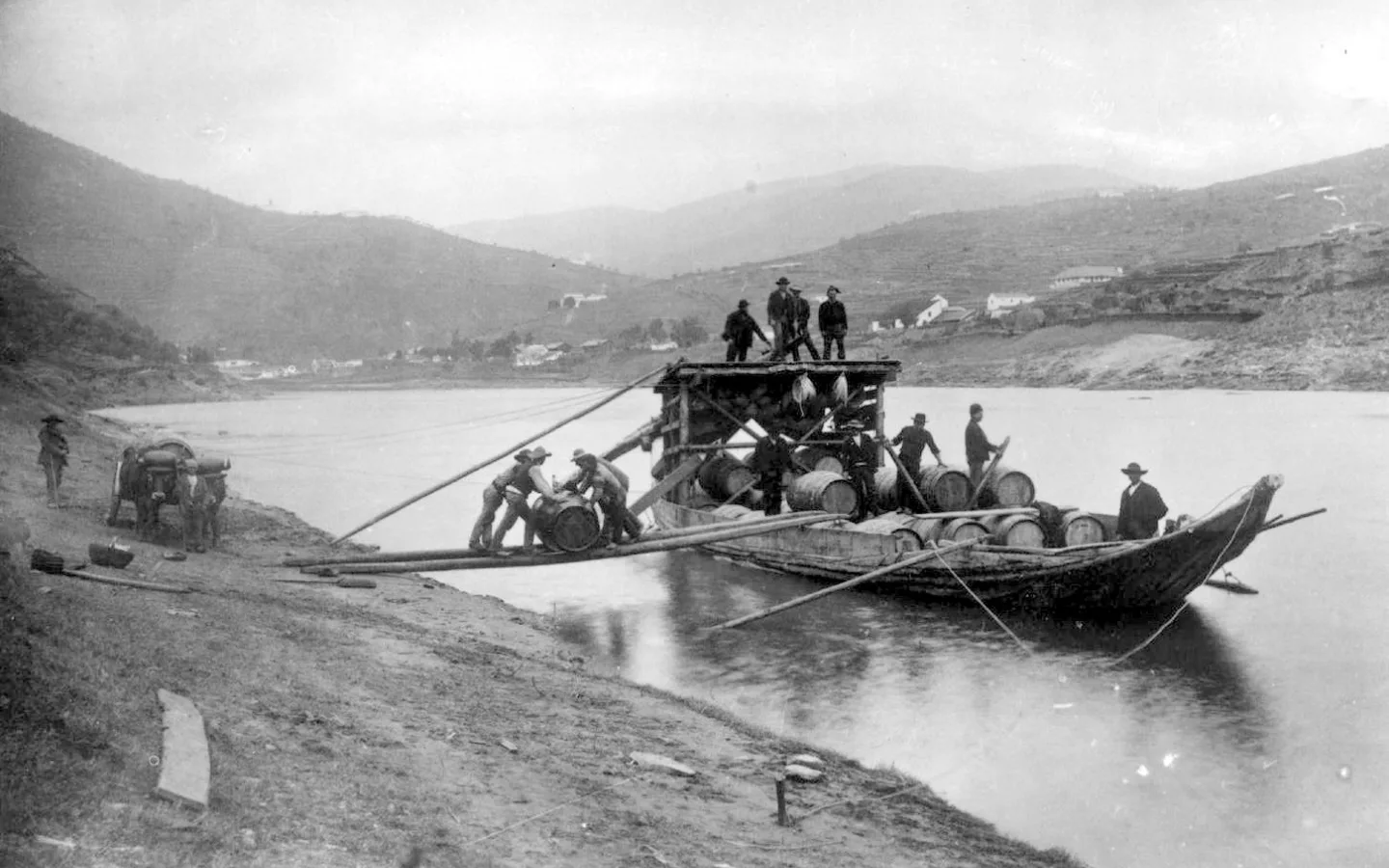
Most golfers picture the game’s history in Scotland: windswept links, grey skies and stone clubhouses. Yet one of the oldest chapters of golf outside Britain was written much further south, on the sunny Atlantic coast of Portugal. In 1890, a small group of British merchants who made their living from port wine decided they could not live without their favourite game. So they built a course of their own beside the sea. Welcome to another chapter of our “Golf Origins” series.
Port Wine, Britain and a Game Far From Home
By the late 19th century, Porto had been home to British wine families for generations. They shipped port from the lodges on the Douro to Britain, and they brought their own customs and sports with them. Golf was one of them. According to Oporto Golf Club’s own history, the club began in 1890, when a group of British players linked to the port wine trade created an improvised nine-hole course. National Club Golfer and The Yeatman, a hotel owned by one of Porto’s historic port wine houses, tell the same story: the club was founded by the British port community.
They chose a stretch of sandy coast at Espinho, just south of Porto. As Top 100 Golf Courses describes, the first holes were laid out between the railway line and the beach. Clubhouse Algarve adds that the site was easy to reach by train, which made it perfect for merchants escaping the city for an afternoon on the links.
St. Skeff Links: A Humble First Course
The first course was far from the manicured fairways we know today. The club’s history describes it as mostly sand and grass, with nine holes and a par of 43. It was called “St. Skeff Links” in honour of the club’s first president, Charles Neville Skeffington. In those early days, the club was known as the Oporto Niblicks, a name that nods to the niblick, an old lofted iron club, as both Top 100 Golf Courses and Clubhouse Algarve record.
Around 1900, the members built a new nine-hole links a little further south, together with their first clubhouse, and the club took the name it still carries: Oporto Golf Club. Sources differ slightly on the exact year, with some giving 1901, but the club itself dates the change to 1900. The full 18-hole links, with a par of 73, finally opened in 1934. If you have ever wondered why that number matters so much, we explained it in why golf has 18 holes.
The Oldest Golf Club in the Iberian Peninsula
Oporto Golf Club is the oldest golf club in Portugal and, as Golf Monthly notes, the oldest on the whole Iberian Peninsula. Spain’s oldest club, the Real Club de Golf de Las Palmas, was founded a year later, in 1891, and it sits out in the Atlantic on Gran Canaria, not on the peninsula itself.
Across continental Europe, only a handful of clubs are older. Top 100 Golf Courses lists Pau, Dinard and Biarritz in France, and Royal Antwerp in Belgium, which makes Oporto the fifth oldest club on the continent. Pau, founded in 1856, is the pioneer: Scottish Golf History calls it the oldest surviving golf course outside Scotland. Like Oporto, it was created by British residents who missed their game. Golf has older roots on the continent too, as we saw in our story of the French game of jeu de mail.
| Year | What happened |
|---|---|
| 1856 | British residents lay out a course at Pau, in south-west France, the oldest surviving golf course outside Scotland |
| 1890 | British port wine merchants create an improvised nine-hole course at Espinho, the “St. Skeff Links” |
| 1891 | The Skeffington Cup is played for the first time |
| c. 1900 | A new nine-hole links is built a little further south, with a first clubhouse, and the club becomes Oporto Golf Club |
| 1934 | The full 18-hole links opens, with a par of 73 |
| 2015 | The club celebrates its 125th anniversary |
The Skeffington Cup: A Trophy That Never Stopped
One of the club’s proudest treasures is the Skeffington Cup, named after its first president. According to the club, it was created by the British residents of the Douro region and first played in 1891. The Albrecht Golf Guide confirms that it has been contested every year since.
The club says the cup became the oldest continuously played golf championship in the world, because clubs in Britain closed and suspended their championships during the two World Wars, while the Skeffington Cup carried on. It is a claim the club is proud of, and one repeated by National Club Golfer, which describes the wood-panelled clubhouse full of trophies and honours boards. Today the club still hosts the Skeffington Cup alongside other traditional international events.
The Fishermen Caddies of Espinho
Golf at Espinho was never only a British affair. A 2015 article published by the Espinho Municipal Library for the club’s 125th anniversary recalls that many of the early caddies were local fishermen. When the sea was too rough to go out in their boats, they walked the links carrying bags to earn money for their families. Clubhouse Algarve also remembers the caddies who came from the local fishing community.
For its first three decades or so, the club remained an exclusive British preserve, as Top 100 Golf Courses puts it. Over time it opened up to Portuguese golfers, and Portuguese members have since led the club, as the Espinho article recalls. The course itself evolved too. It was later reshaped by the Scottish architect Philip Mackenzie Ross, who also designed the current course at Las Palmas. Yet it has kept its links character. Like the Old Course at St Andrews, Oporto is a reminder that the best courses grow slowly out of the land around them.
From Portugal’s First Links to Your Feet
There is a lovely thread running through this story. The British came to northern Portugal for the craftsmanship of its wine, and they stayed long enough to bring golf with them. More than a century later, northern Portugal is still famous for craftsmanship, and that includes shoemaking.
Every pair of Lambda Golf shoes is handmade in Portugal from premium leather, built like a fine dress shoe and performing like a sports shoe. They are made to walk a windy links all day and still look elegant in a wood-panelled clubhouse. With Christmas around the corner, they also make a thoughtful gift for a golfer who appreciates tradition. As we explained in handmade vs mass-produced golf shoes, the difference is in the details. Explore our golf shoes for gentlemen, our golf shoes for ladies and our luxury golf shoes.
Conclusion
Oporto Golf Club was born in 1890 from a simple wish: a group of British port wine merchants wanted to play the game they loved, even far from home. From the sandy nine holes of St. Skeff Links to today’s 18-hole links at Espinho, it has become the oldest golf club in Portugal and on the Iberian Peninsula, and the keeper of one of golf’s most enduring trophies.
Next time you raise a glass of port, remember that the same people who shipped it to the world also helped bring golf to Portugal. Stay tuned for our next “Golf Origins” story.
Sources
- Oporto Golf Club – História (Skeffington Cup)
- Top 100 Golf Courses – Oporto Golf Club
- National Club Golfer Top 100 – Oporto
- Golf Monthly – Undiscovered Portugal
- Clubhouse Algarve – Celebrating 125 Years of Golf in Portugal
- Biblioteca Municipal de Espinho – Oporto Golf Club 125th anniversary article (2015)
- The Yeatman – Golf in Porto
- Albrecht Golf Guide – Oporto Golf Club
- Scottish Golf History – 1856 Pau
- Hello Canary Islands – Real Club de Golf de Las Palmas
- Featured image: Loading port wine onto a rabelo boat at Pinhão, Douro, c. 1911 (Emílio Biel), Wikimedia Commons (public domain)